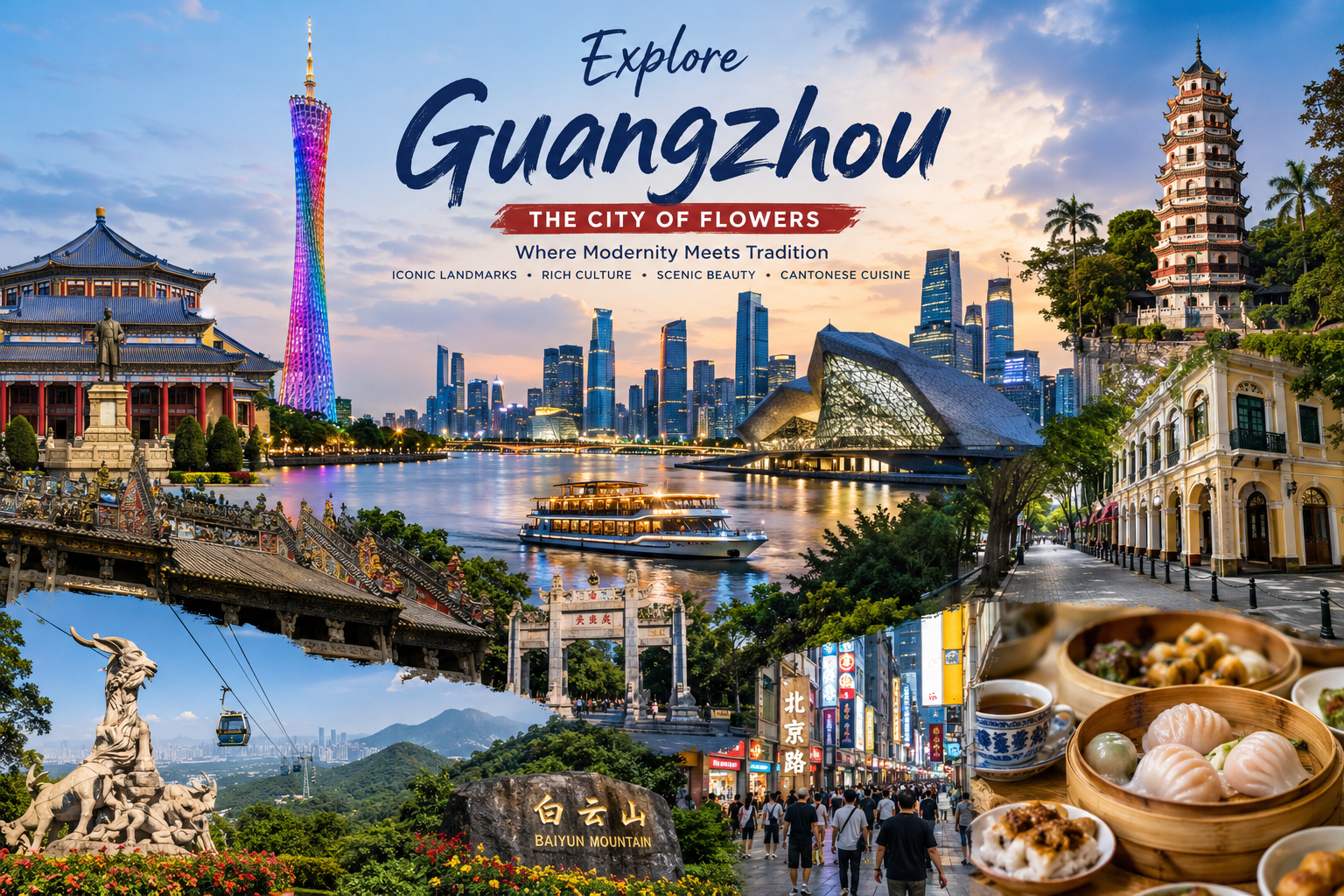
Guangzhou, the capital of Guangdong Province in southern China, is one of the country’s most dynamic and historically rich cities. Known for its blend of ancient Lingnan culture, cutting-edge skyscrapers, vibrant food scene, and centuries-old trade legacy, Guangzhou offers travelers a deep and varied experience. Often called the “City of Flowers,” it is a place where modernity and tradition coexist in striking contrast.
This article explores the most remarkable travel destinations in Guangzhou, from iconic landmarks and historical sites to natural escapes, cultural districts, and culinary hotspots.
A Brief Introduction to Guangzhou
Guangzhou is located on the Pearl River and has long been one of China’s most important trade and cultural centers. It was a key port on the ancient Maritime Silk Road and remains a major gateway for international business today. The city’s warm, humid climate and lush greenery contribute to its nickname, “City of Flowers.”
Modern Guangzhou is a sprawling metropolis of over 18 million people, but its historical roots can still be found in temples, ancestral halls, old neighborhoods, and riverfront districts.
Iconic Landmarks in Guangzhou
Canton Tower
One of the most recognizable symbols of modern Guangzhou is the Canton Tower. Standing along the Pearl River, this 600-meter-tall structure is among the tallest towers in the world. It is an architectural marvel known for its twisting design and illuminated night view.
Visitors can take high-speed elevators to observation decks that offer panoramic views of the entire city skyline. For thrill-seekers, the tower also features a “sky drop” ride—one of the highest amusement rides in the world. At night, the tower lights up in colorful patterns, making it a centerpiece of Guangzhou’s modern identity.
Guangzhou Opera House
Another masterpiece of modern architecture is the Guangzhou Opera House, designed by renowned architect Zaha Hadid. Located near the Pearl River New Town area, its futuristic, pebble-like design symbolizes the city’s forward-looking spirit.
Inside, the opera house hosts world-class performances, including symphonies, ballet, and Chinese opera. Even if you do not attend a show, the building itself is worth visiting for its stunning design and riverside surroundings.
Sun Yat-sen Memorial Hall
The Sun Yat-sen Memorial Hall is a significant historical and cultural landmark dedicated to Dr. Sun Yat-sen, the founding father of modern China. Built in traditional Chinese architectural style with a blue-tiled roof and grand hall structure, it reflects both reverence and architectural elegance.
The hall is surrounded by gardens and is often used for cultural events and public gatherings. It offers insight into China’s revolutionary history and Guangzhou’s role in political change during the early 20th century.
Historical and Cultural Sites
Chen Clan Ancestral Hall
The Chen Clan Ancestral Hall is one of the finest examples of traditional Lingnan architecture. Built in the late Qing Dynasty, it served as an academy and ancestral temple for the Chen family.
Today, it functions as the Guangdong Folk Art Museum, showcasing intricate wood carvings, ceramic sculptures, embroidered textiles, and stone engravings. Every corner of the hall reflects extraordinary craftsmanship and cultural heritage.
Temple of the Six Banyan Trees
The Temple of the Six Banyan Trees is a Buddhist temple with a history spanning more than 1,400 years. Its most famous feature is the Flower Pagoda, a striking multi-tiered tower that rises above the temple complex.
Inside, visitors can see ancient Buddhist statues, incense-filled halls, and peaceful courtyards. The temple remains an active place of worship and provides a serene contrast to the busy city outside.
Shamian Island
Shamian Island is a small island on the Pearl River that reflects Guangzhou’s colonial past. Once a concession area for European powers in the 19th century, it is now a quiet, picturesque district filled with tree-lined streets and well-preserved colonial architecture.
Walking through Shamian feels like stepping into another era, with Gothic-style churches, neoclassical buildings, and riverside promenades. It is a favorite spot for photographers and couples seeking a peaceful escape.
Natural Attractions and Scenic Areas
Baiyun Mountain
Baiyun Mountain, also known as White Cloud Mountain, is one of the most famous natural attractions in the city. It offers hiking trails, botanical gardens, scenic viewpoints, and cable car rides.
From the summit, visitors can enjoy sweeping views of Guangzhou’s skyline and surrounding landscapes. The mountain is especially beautiful during sunrise or after rainfall when mist rolls over the peaks, creating a dreamy atmosphere.
Yuexiu Park
Yuexiu Park is the largest urban park in central Guangzhou and a perfect blend of nature and history. It is home to the famous Five Rams Statue, a symbol of the city’s legendary origin story.
The park also features ancient city walls, lakes, gardens, and cultural relics. Locals often come here to exercise, practice tai chi, or relax under shaded trees.
Pearl River Night Cruise
A trip to Guangzhou is incomplete without experiencing a night cruise along the Pearl River. The river flows through the heart of the city, offering spectacular views of illuminated skyscrapers, bridges, and waterfront landmarks like Canton Tower.
The cruise provides a relaxing way to see the city from a different perspective, especially after sunset when Guangzhou transforms into a glowing metropolis.
Modern Districts and Shopping Areas
Zhujiang New Town
Zhujiang New Town is the modern central business district of Guangzhou. It is filled with skyscrapers, luxury hotels, shopping malls, and cultural buildings such as the opera house and library.
This area represents the city’s rapid modernization and is especially impressive at night when the skyline is fully illuminated.
Beijing Road Pedestrian Street
Beijing Road Pedestrian Street is one of the busiest shopping areas in the city. What makes it unique is the glass panels on the street that reveal ancient road layers beneath, dating back over a thousand years.
It is a vibrant mix of modern retail stores, street food vendors, and historical relics, making it an ideal destination for both shopping and cultural exploration.
Tianhe District
Tianhe District is another major commercial hub featuring high-end malls, sports venues, and corporate headquarters. It is a symbol of Guangzhou’s economic strength and urban development.
Food and Culinary Experiences
Guangzhou is widely regarded as the birthplace of Cantonese cuisine, one of the most influential culinary traditions in the world. Travelers often come here specifically for the food.
Dim sum is the most famous culinary experience, with dishes like shrimp dumplings, char siu bao, and rice noodle rolls served in traditional tea houses. Local restaurants and street vendors also offer roasted meats, congee, wonton noodles, and fresh seafood.
The city’s morning tea culture, known as “yum cha,” is an essential social ritual where families gather to enjoy tea and small dishes.
Cultural Experiences and Local Life
Beyond attractions and landmarks, Guangzhou’s true charm lies in its everyday life. Markets such as Qingping Market offer herbs, traditional medicines, and exotic goods, reflecting the city’s trading heritage.
Art districts and museums showcase both contemporary Chinese art and Lingnan cultural traditions. Festivals, especially the Spring Festival and Lantern Festival, bring the city alive with lantern displays, dragon dances, and fireworks.
Walking through residential neighborhoods reveals a slower, more traditional side of Guangzhou where elderly residents play chess in parks and shopkeepers maintain generations-old businesses.
Day Trips Around Guangzhou
Travelers can also explore nearby destinations. The Pearl River Delta region includes historic towns, natural reserves, and coastal areas. Foshan, Zhongshan, and Shenzhen are all accessible within a short train ride, each offering unique cultural and economic perspectives.
These nearby cities complement a Guangzhou itinerary by showcasing the broader diversity of Guangdong Province.
Best Time to Visit Guangzhou
The ideal time to visit Guangzhou is from October to December, when temperatures are comfortable and humidity is lower. Spring (March–April) is also pleasant with blooming flowers, while summer is hot and humid with frequent rainfall.
Conclusion:
Guangzhou is a city of contrasts—ancient yet modern, fast-paced yet deeply traditional, industrial yet green and livable. From the towering heights of Canton Tower to the peaceful pathways of Baiyun Mountain, from colonial Shamian Island to bustling Beijing Road, every corner of the city tells a different story. Import & Export
Whether you are interested in history, architecture, nature, shopping, or food, Guangzhou offers a rich and layered travel experience. It is not just a destination to visit, but a city to explore deeply and experience slowly.
For travelers seeking to understand the evolution of modern China while still experiencing its cultural roots, Guangzhou stands as one of the most rewarding cities to explore.
Rent an Apartment in Guangzhou